Editor’s Note: This review was first published in 2017 and has been updated to reflect my long-term experience with the NiSi Medium GND and the evolution of my workflow.
The NiSi Medium GND has been part of my filter kit for years, and it remains one of the most versatile graduated neutral density (GND) filters I’ve used. I’ve tested it across countless conditions, from the stormy light of Norway’s Arctic to the soft tones of Spanish coastlines, and it continues to impress with its balance, neutrality, and build quality.
While my workflow has evolved over time (I now rely more on bracketing exposures), this filter still deserves a place in the conversation for photographers who prefer balancing light directly in-camera.
The Difference Between Soft and Hard GND Filters
There are several types of Graduated ND Filters: Soft, Hard, Reverse, and Medium. These terms describe how gradual or abrupt the transition is between the darkened and clear parts of the filter.
In simple terms, a Soft GND has a smooth, gradual fade that works well with uneven horizons. A Hard GND has a sharper edge, perfect for flat horizons such as seascapes.
The Medium GND sits in between, giving you flexibility when the landscape includes mountains, trees, or buildings that rise above the horizon. That’s where the NiSi Medium GND excels; it provides balance without introducing harsh lines or uneven exposure transitions.
Recommended Reading: Introduction to Graduated ND Filters
What About the Medium Transition?
So, where does this leave the Medium GND? Well, you don’t need to be a rocket scientist to understand that the Medium GND’s transition is between the Soft and Hard GND.

What this means in reality, though, is that you can use this filter even when there are objects projecting above the horizon, either it’s a building, trees, mountains or anything else, without having to worry about a visibly darkened line cutting through them.
I’ve found this to be extremely beneficial as the lower parts of the transition remain dark enough to avoid severe clipping in the highlights, while it’s still transparent enough to avoid darkening unwanted elements too much.
Recommended Reading: The Exposure Triangle in Photography [Comprehensive Guide]
Filter Quality
Build quality and color accuracy are where NiSi consistently stands out. The Medium GND is made from high-quality optical glass with nano coating, making it waterproof, easy to clean, and resistant to scratches, a big difference from the resin filters that used to dominate the market.
One of NiSi’s greatest strengths is its neutral color rendition. There’s virtually no visible color cast, even when stacking multiple filters, which means less time correcting tones in post-processing.

While I personally bracket most of my images these days, I continue to recommend NiSi filters for those who prefer using GNDs in the field. Their optical quality and durability remain among the best, and if I were still shooting with GNDs regularly, this would be the one I’d carry.
For those who prefer a faster and more modern setup, NiSi’s JetMag Pro magnetic filter system offers the same optical quality with easier handling in the field.
Image Examples
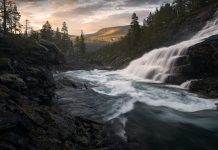
What is a review without any image examples? Below are several with/without examples and you’ll also notice that in a few of the examples I’ve also used a regular ND filter. All of these images are straight out of the camera and have not been processed, in order for you to properly see how the filters work in action.


Summary
After years of use, the NiSi Medium GND still holds up as one of the most balanced and reliable graduated filters available. It’s durable, optically neutral, and versatile enough to replace both soft and hard GNDs in many situations.
While today’s sensors and post-processing tools make it easier than ever to blend exposures digitally, this filter remains a great option for those who prefer to get results right in-camera, especially when shooting dynamic skies or long exposures.
If you’re looking for a new (or your first) Graduated ND Filter, I can highly recommend this one, and I believe you’ll be satisfied with it as well.