I’ve always loved winter, and grew up skiing and playing in the snow, but it took me years to truly appreciate it as a photographer.
Maybe it’s because I started young and didn’t have a way to get around, or maybe my vision simply changed over time.
Either way, winter has now become my favorite season to photograph. The constantly shifting weather, soft light, and fresh layers of snow can transform even the most ordinary landscapes into something special.
Photographing winter does come with its challenges, though. In this article, you’ll learn my top tips for capturing better winter photos, whether you’re shooting blizzards, frozen lakes, snowy forests, or northern lights.
#1 There’s No Bad Weather in Winter Photography
It’s tempting to stay inside with a warm drink when the wind is howling and the snow is blowing sideways. But some of the most atmospheric winter images happen exactly in those conditions.
Whiteouts, snowstorms, and blowing snow all offer unique opportunities. They simplify the landscape, add mood, and reveal the real character of winter.
Take the image above as an example. The strong winds and snow made it one of the colder moments from our Lofoten Photo Tour, but also one of the most rewarding. The storm created an atmosphere that simply doesn’t appear on calm days.

Here are a few quick tips when shooting in rough conditions:
- Experiment with shutter speed to see how motion in the snow affects the image
- Bring a microfiber cloth, you’ll use it constantly (Personally, I use these from MagicFiber)
- Be patient; winter weather can change quickly
Some of my favorite winter photos were taken on days when it would’ve been easier to stay home.
#2 Isolate the Main Subject
One of the most efficient steps to create more compelling winter images is to isolate the main subject. Snow naturally simplifies the landscape, making it easier to separate what matters from what doesn’t.
In the image below, there is no doubt about the main subject. It stands alone, free from distractions, because the surrounding elements disappear into the whiteout.

Being able to isolate a subject takes some trial and error. You need to be careful when setting up the composition. Look closely at the image preview and see if any distracting elements overlap with the main subject.
What about the background? Is your subject blending in or standing out? This is perhaps the trickiest part. Sometimes, you simply need to wait for the ‘right’ conditions. The image above, for example, wouldn’t be the same if it wasn’t a whiteout and you could see the forest in the back.
Isolation is a powerful compositional technique in any season, but it works especially well in snowy landscapes.
#3 Watch Your Step!
It’s easy to get carried away and run around looking for new compositions, but I strongly recommend that you mind your steps. Especially when photographing in fresh snow.
Take a few minutes to analyze the scene when approaching it. Look around and carefully consider your subject and perspective.
When you’ve got an idea of your approach, walk carefully toward the desired composition and avoid making unnecessary tracks in the snow. Take a detour if necessary.

Failing to do so will give you a lot of extra work in post-processing and can, in the worst case, ruin an otherwise great image.
Remember, you want your images to have as few distracting elements as possible. Unintentional footprints are one of these elements you want to get rid of.
A good workflow is:
- Stop at a distance and study the composition
- Choose your shooting position
- Take the cleanest possible route to your spot
- Avoid wandering back and forth behind your composition
#4 There are 24 Hours of Opportunities
As landscape photographers, we often hear that good images are only captured during the Golden Hour. It might be true that this time of day has a photogenic light, but it’s not true that it’s the only time you should be taking images.
TJ Thorne says it best in his eBook ‘There’s No Such Thing as Bad Light.’ Good light is all around us.
This is especially true for winter photography. The opportunities are equally great during the day and night. Even a blue sunny sky with harsh light can result in interesting images when you’re in a winter wonderland.

My favorite times to photograph winter are at night or midday on a snowy day. There’s not much that’s more exciting than hiking in a snow-covered landscape with a star-filled sky above your head and perhaps even the odd possibility of some northern lights.
Recommended Reading: Beginners Guide to Night Photography: Master the Night
#5 Use a Cold White Balance
Those who have done photography for a while are well aware that the White Balance can easily be adjusted in post-processing and have little to say when you’re photographing in RAW.
If you’re anything like me, though, you like doing as much as possible in-camera to give yourself a better starting point when the editing begins.
For most winter scenes, a cooler white balance works best. Too warm, and the snow quickly turns yellow or muddy. Cooler values help maintain the crisp, clean feeling of winter.

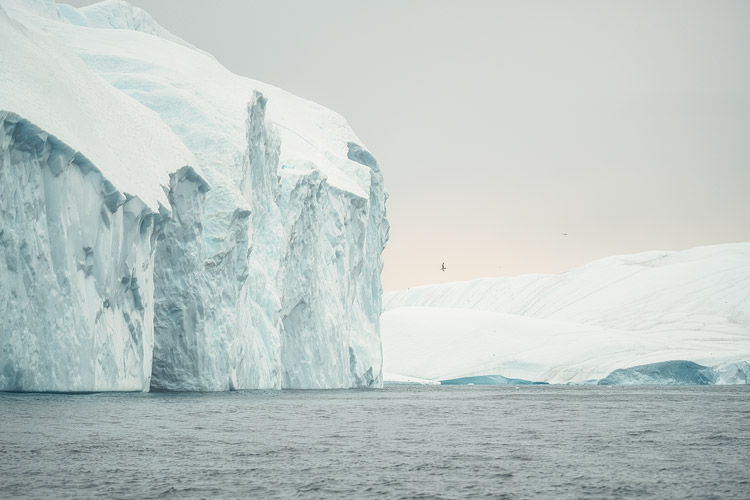
A colorful sunrise or sunset can benefit from a warmer setting, but remember you’re not photographing the Bahamas. Use white balance creatively, but keep an eye on how the snow reacts.
#6 Look for Textures in the Foreground
Winter photography offers many opportunities to find interesting and unique foregrounds. Take the image below as an example; this shot wouldn’t have been possible without the freezing temperatures and cracked ice.

It’s easy to think that snow covers everything and removes interesting foregrounds, but winter often provides some of the best textures of the year. Some examples are:
- Cracked ice
- Wind-shaped snowdrifts
- Frost patterns
- Frozen lakes and puddles
- Snow-covered rocks
- Thin ice over tidal flats
- Fresh powder with untouched texture
This is yet another reason why it’s important to slow down and observe your surroundings before you begin photographing winter. You’ll be surprised by what you find!
Bonus Tip: Bring Extra Batteries
It’s no secret that battery lives are dramatically shortened when temperatures drop below freezing. I’m sure you’ve experienced this yourself. It’s even more noticeable when using Live View.
There are ways to extend battery life when photographing in winter, but I strongly recommend keeping a couple of extra batteries in your pocket or backpack.
I always bring at least two spare batteries, no matter what. If I plan longer adventures, I’ll bring even more.
Conclusion
Winter is an excellent season for landscape photographers willing to brave the cold and stormy weather. It’s a time when you’re able to capture the elements.
Take your time, explore the surroundings, and enjoy being outdoors. Don’t worry too much about getting everything technically perfect. Let the landscape guide you, and photograph what inspires you.
With these tips in mind, you’ll be much better prepared to capture the beauty and atmosphere of winter.
Good luck! Be sure to share some of your favorite winter photos with us in a comment below.