

Canary Islands Photo Tour: La Palma & Tenerife
June 1st - 9th, 2027
Canary Islands Astrophotography Tour
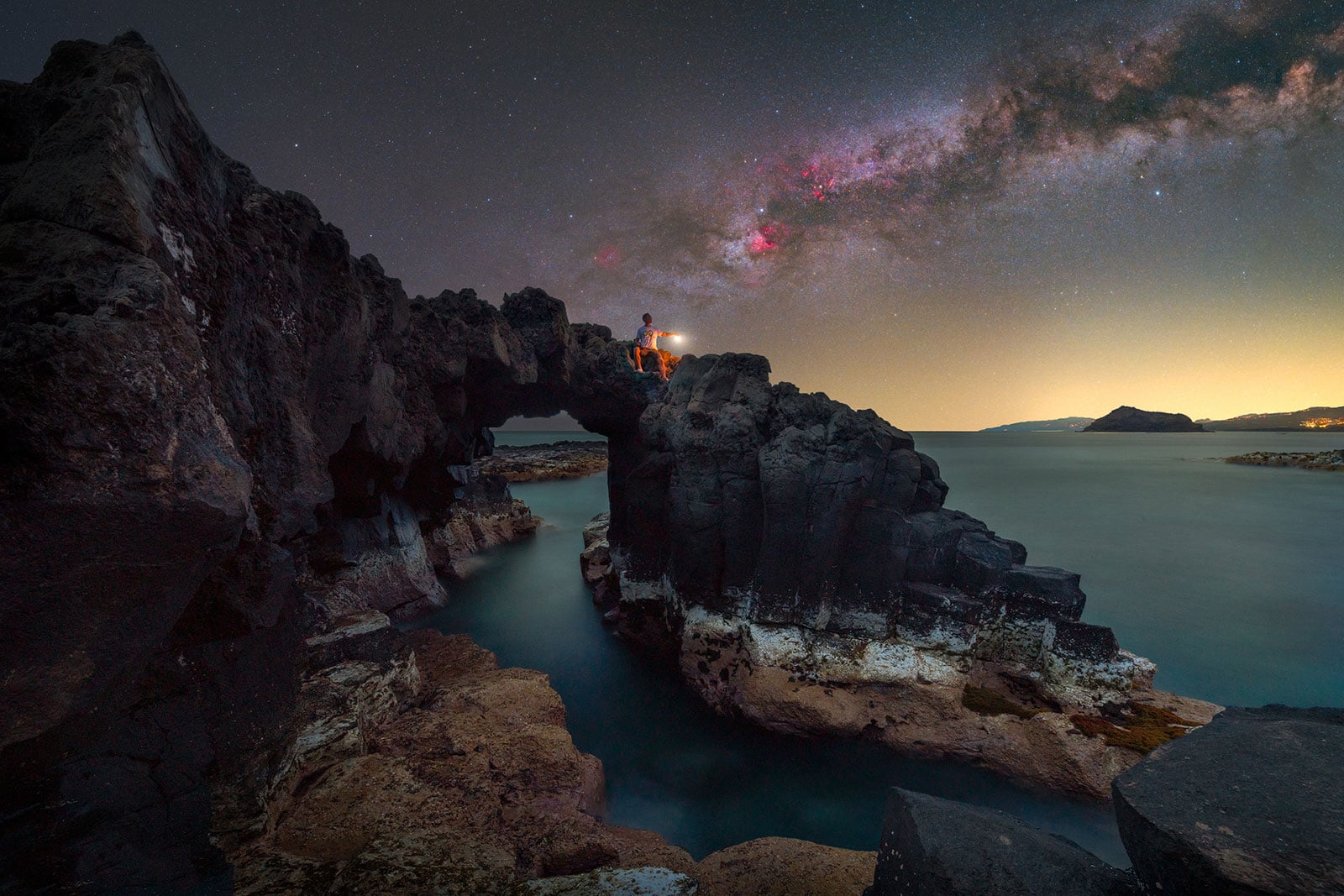
The Canary Islands offer some of the finest night skies in Europe. High altitude, minimal light pollution, and a climate that produces clear skies with unusual consistency make Tenerife and La Palma two of the best places on the continent to photograph the Milky Way. This 9-day tour combines both islands in a single itinerary, timed specifically for June when the Milky Way arch is fully visible and the iconic Tajinaste wildflowers are in bloom across the volcanic landscapes.
The main focus is astrophotography. Over the course of the tour, we shoot from high-altitude locations above the cloud layer on multiple nights, work through a complete Milky Way editing workflow together, and explore more advanced techniques including H-alpha capture and blending with RGB files in Photoshop. There’s also time for daytime landscape photography, coastal scenery, and a guided visit to the Roque de los Muchachos Observatory, home to some of the world’s most powerful telescopes.
The tour starts at Tenerife South Airport and ends at La Palma Airport, with a ferry crossing between the islands included. Both hotels are H10 properties in coastal locations, giving you a comfortable base to recover between the night sessions.
This tour is co-led by Giulio Cobianchi, a landscape and night photography specialist with 15 years of experience and a long history of guiding astrophotography workshops in the Canary Islands.


Small Group Experience
With a maximum of 10 participants and two guides, you’ll have genuine individual attention throughout the tour, both in the field during night sessions and during the post-processing workshops.
Night photography works differently from daytime landscape work. There’s more planning involved, more waiting, and more variables outside your control. We keep the groups deliberately small so that everyone gets real guidance at the moment they need it, not a general explanation given to a crowd.
Throughout the tour, we’ll work on building your confidence with astrophotography from the ground up, from reading the conditions and planning the shot to editing the results. Whether you’ve never photographed the Milky Way before or want to push your existing skills into more advanced territory, there’s enough depth here to challenge you.
Itinerary
The tour is timed for the best conditions on both islands. Early June brings a full Milky Way arch, Tajinaste flowers in peak bloom across the volcanic terrain, and consistently stable skies at altitude.
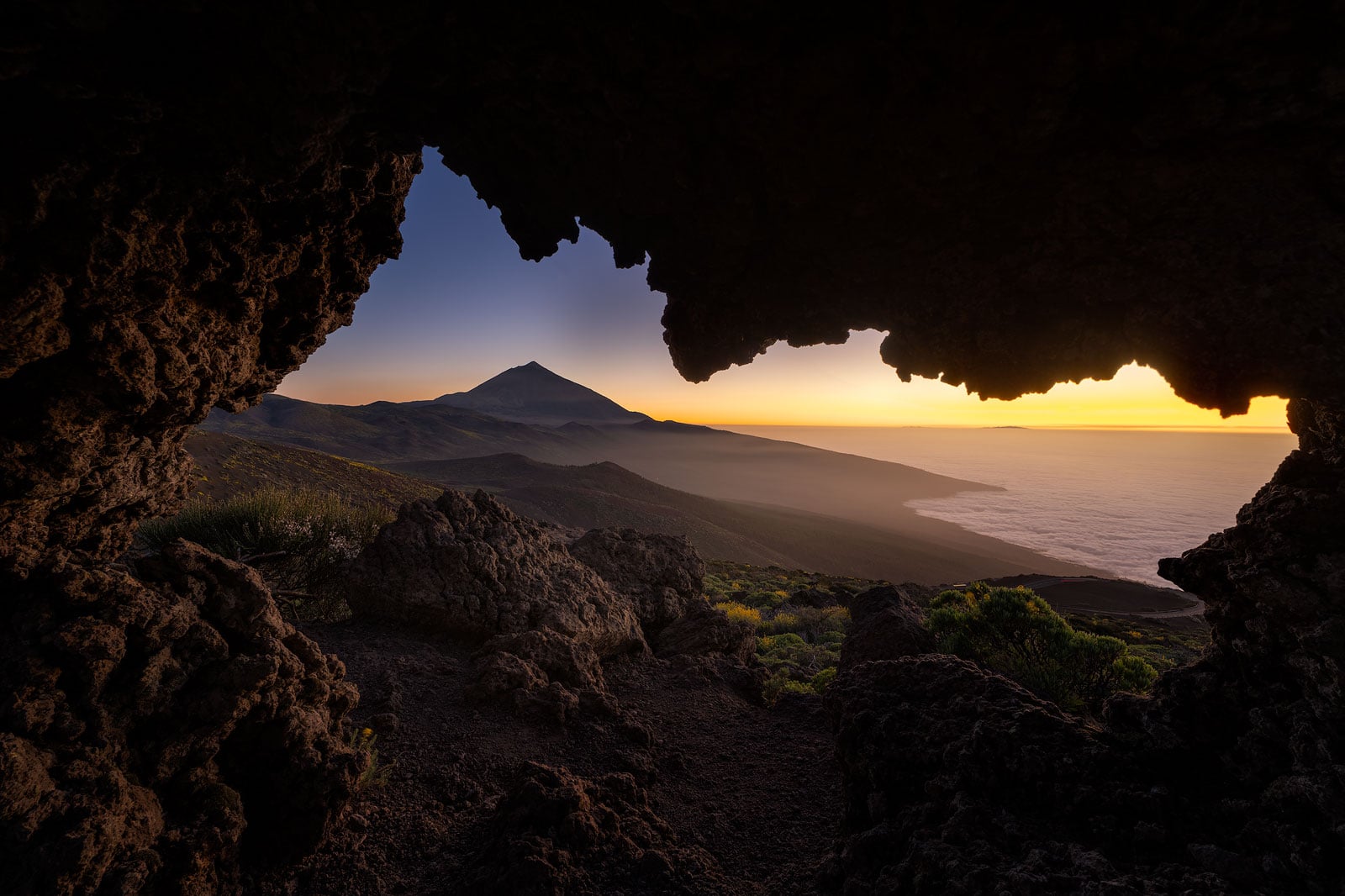
We begin in Tenerife, spending four nights based in the Los Cristianos area with access to Teide National Park. The volcanic caldera and lava formations at Roques de García and La Catedral provide some of the most dramatic foreground elements for night photography anywhere in Europe, and we return to the park across multiple sessions to work with different conditions and compositions. We also photograph the Atlantic coastline at Punta del Hidalgo and the extraordinary lava fields at Minas de San José, which sit between 2,000 and 2,400 meters and feel unlike anywhere else in the world.
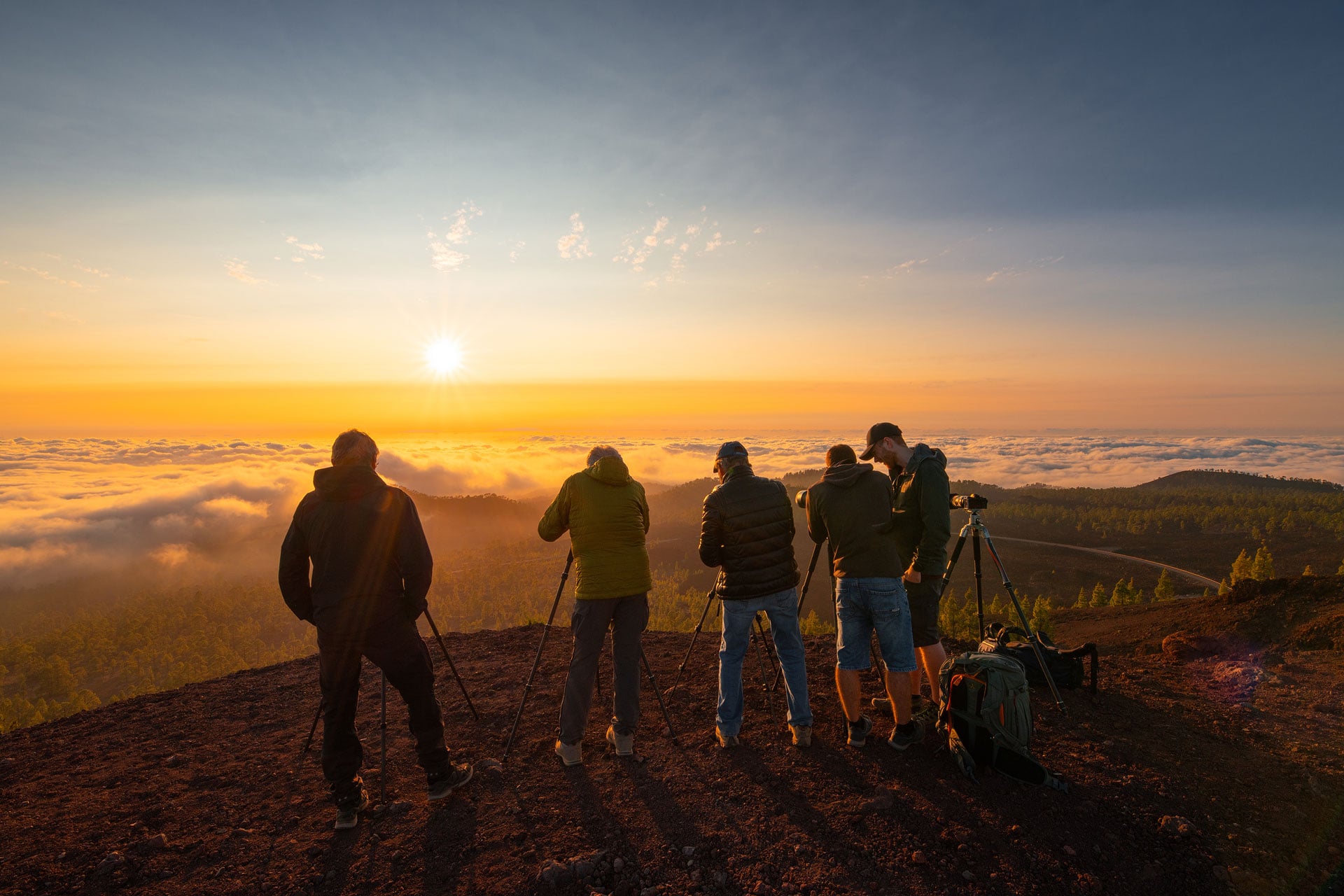
On Day 5, we cross by ferry to La Palma, where we’re based near Los Cancajos for four nights. La Palma holds the distinction of being one of the few places in the world with legally protected dark skies, and the Roque de los Muchachos area at 2,400 meters offers some of the clearest night skies available anywhere in Europe. We photograph here across multiple nights, including sessions at Mirador de los Andenes and Pico de la Cruz, where the Caldera de Taburiente sits below a moving ocean of cloud while the Milky Way arches overhead.
The post-processing sessions happen throughout the La Palma days, covering a complete landscape and astrophotography workflow, panorama stitching, Milky Way processing, and H-alpha blending with RGB files.
The final full day includes a guided visit to the Roque de los Muchachos Observatory, led by a professional astrophysicist, and a photography session in a canyon with a waterfall.
What Makes This Canary Islands Photo Tour Special
Two islands, one itinerary Very few tours combine Tenerife and La Palma. The included ferry crossing and carefully planned schedule give you access to two genuinely different volcanic environments in a single trip.
Timed for peak conditions Early June is chosen specifically for the full Milky Way arch, peak Tajinaste bloom, and the stable clear skies that make the Canary Islands so reliable for astrophotography at this time of year.
Above the cloud layer Several sessions take place at 2,000 to 2,400 meters, shooting in conditions where the cloud layer sits below you, and the sky above is free of moisture and light pollution.
Observatory visit included A guided tour of the Roque de los Muchachos Observatory with a professional astrophysicist, including the Gran Telescopio Canarias and the MAGIC and LST telescope arrays.
Advanced post-processing included Two dedicated editing sessions covering a complete astrophotography workflow, panorama stitching, and H-alpha and RGB blending in Photoshop. Aimed at developing real editing skills rather than just reviewing the day’s images.
Experienced night photography guidance Giulio has been guiding astrophotography workshops in the Canary Islands for years and knows these locations and conditions well. This is not a general landscape tour with some night photography added.
Canary Islands Photo Tour FAQ
WHAT LEVEL OF PHOTOGRAPHY IS REQUIRED?
This tour is suitable for photographers of all levels, from complete beginners to those with existing experience in astrophotography. The only real requirement is an interest in night photography and a willingness to spend evenings outdoors in volcanic mountain environments.
Because the group is small and the guidance is hands-on, we can work with each participant at their own level. More experienced photographers will have access to the advanced techniques; less experienced participants will get a solid foundation and leave with a clear understanding of how to photograph the night sky.
WHAT PHYSICAL FITNESS IS REQUIRED?
This is an easy tour in terms of physical demands. Most locations are reached with short, straightforward walks from where we park, and there are no long hikes required. The volcanic terrain can be uneven in places, so good footwear matters more than fitness level.
WHAT SHOULD I BRING?
During the day, the coastal locations are warm and comfortable, and light clothing is fine. For the night sessions at altitudes between 2,000 and 2,400 meters, the temperature drops significantly after sunset, and wind can make it feel even colder. Bring a proper insulating mid layer and a windproof outer layer for these sessions, along with warm gloves and a hat. Hiking boots or shoes with good grip are recommended throughout, as many locations involve volcanic terrain and lava fields.
WHAT WEATHER CAN I EXPECT?
Early June in the Canary Islands generally brings stable conditions, particularly at altitude. Coastal temperatures are typically between 20 and 26°C (68 to 79°F) during the day. At the high-altitude locations where most of our night sessions take place, temperatures after sunset are usually between 5 and 10°C (41 to 50°F), and wind chill can make it feel cooler. The cloud layer usually sits well below the shooting locations, which is part of what makes these sites so good for night photography.
WHAT CAMERA GEAR SHOULD I BRING?
At minimum, bring a camera with full manual control, a sturdy tripod, and a remote shutter release. For the Milky Way sessions, a fast wide-angle lens is important: f/1.8 or f/2.8 at 14 to 20mm gives you the most flexibility for single exposures without a tracker. If you plan to use a star tracker, lenses can be slightly slower since you’ll be able to use longer exposures without star trails.
A star tracker is a useful but optional addition that we’ll cover during the tour if you bring one. A drone is also welcome at locations where regulations allow it, and a power bank is worth having for the longer night sessions.
WILL POST-PROCESSING SESSIONS BE INCLUDED?
Yes, and this is a significant part of the tour. Two dedicated editing sessions take place during the La Palma days, covering a complete start-to-finish Milky Way workflow, panorama stitching, and the more advanced technique of capturing H-alpha data and blending it with RGB files in Photoshop. These sessions are designed to give you a real, transferable workflow rather than a general overview.
DOES THE TOUR START AND END AT THE SAME AIRPORT?
No. The tour starts at Tenerife South Airport (TFS) on June 1st and ends at La Palma Airport (SPC) on June 9th. The ferry crossing between the islands is included. Please plan your flights accordingly, and make sure your departure from La Palma is not before 10 AM on June 9th.
Ready to Join Us in the Canary Islands?
If you would like to join this Dolomites Photo Tour, simply complete the inquiry form below. I’ll get back to you with availability and answer any questions you may have.
Spaces are limited to 10 participants to ensure a relaxed and productive learning experience for everyone.
Quick Facts
Dates: June 1 – June 9, 2027
Location: Canary Islands, Spain (Tenerife and La Palma)
Difficulty level: Easy. Short walks to most locations on volcanic terrain; good footwear recommended.
Price: €3,590 (based on double occupancy — single room supplement available for €900)
Registration deposit: €800 (remaining balance due 90 days prior to the tour)
Arrival: Tenerife South Airport (TFS), June 1st, by 4 PM
Departure: La Palma Airport (SPC), June 9th, not before 10 AM
Included: Two professional photography guides, all photography tuition, post-processing sessions, H10 hotel accommodation throughout, breakfast daily, all private shuttle transportation, ferry crossing between Tenerife and La Palma, guided visit to the Roque de los Muchachos Observatory, and a private WhatsApp group for the duration of the trip.
Not included: International flights, meals other than breakfast, travel and medical insurance, personal expenses, and equipment insurance.
Tour Leaders
Christian Hoiberg
Christian Hoiberg is a full-time Norwegian landscape photographer based in the Lofoten Islands. He's the founder of CaptureLandscapes, a leading resource for landscape photography education. Christian's goal is to help aspiring photographers build the skills needed to create meaningful and impactful images, both in the field and through post-processing.
Giulio Cobianchi
Giulio Cobianchi is a professional landscape and night photographer with 15 years of experience. His passion for astrophotography and remote, dark-sky environments has taken him from the Dolomites to the Canary Islands, where he has been guiding photographers through Milky Way workshops for years. He knows these islands and these skies well.